Cornered and Creating: Why the Best Work Often Comes When You Have No Other Choice
There's a version of the creative process that looks really good on paper. You wake up early, you've got your coffee, your outline is clean, your notes are organized, and you move through your draft like a person who has their life together. That version exists. I've lived it maybe four or five times.
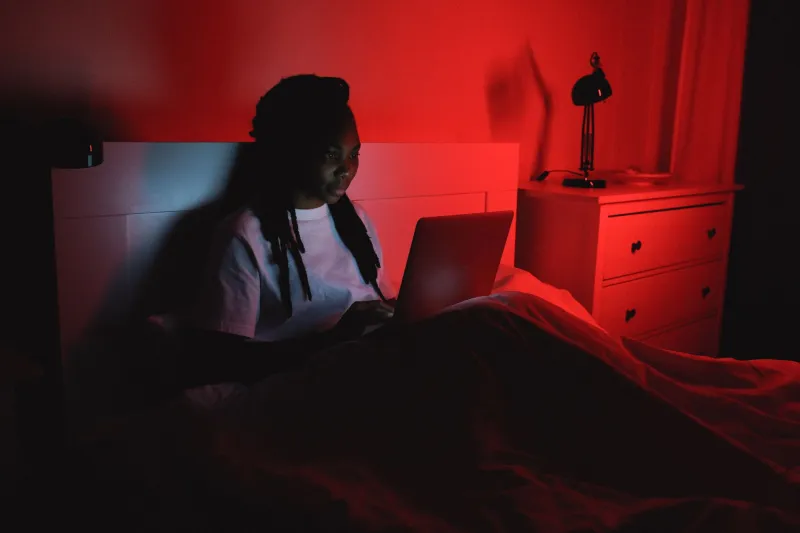
The other version — the one nobody puts in the writing memoir — is the 3 AM hotel room. Laptop open. Half a lukewarm Diet Coke on the nightstand. A deadline that stopped being abstract about six hours ago. And somehow, somehow, that's the version that produces the thing people remember.
I've been thinking about this a lot lately. Because the more I dig into how great creative work actually gets made — not the polished after-the-fact story, but the real mechanics of it — the more I keep running into the same uncomfortable truth: a lot of the best stuff was born from desperation, not design.
The Hotel Room Mythology Is Real
Let's talk about some actual cases, because this isn't just a feeling.
The final scene of Rocky — the raw, chaotic, emotionally overwhelming ending where Rocky just wants to find Adrian in the crowd — wasn't in the original script. Sylvester Stallone rewrote significant portions of that film under serious time and financial pressure, working in conditions that were far from ideal. The polish was stripped away, and what was left was something nakedly human.
Or consider how many writers talk about the phenomenon where the chapter they almost cut, the one written in a frenzy the night before a draft was due, ends up being the one their editor calls out as the emotional heart of the book. It happens constantly. The chapter that felt reckless, unguarded, almost embarrassing in how direct it was — that's the one that lands.
There's a reason for this, and it's not mystical.
What Pressure Actually Does to Your Brain
When you have unlimited time, you also have unlimited room for doubt. You can second-guess every sentence. You can rewrite the opening paragraph seventeen times trying to find the "right" version. You can overthink the metaphor, the pacing, the word choice, until the life gets squeezed right out of it.
Deadline panic removes that option. When the clock is running, your brain stops auditioning ideas and starts committing to them. You stop asking is this good enough and start asking does this work right now. That's a fundamentally different creative mode — and it's often a more honest one.
There's also something to be said for how constraint forces specificity. When you don't have time to be vague or to hedge your bets narratively, you reach for the most direct version of what you're trying to say. And directness, in storytelling, is almost always more powerful than cleverness.
The writer under pressure isn't trying to impress anyone. They're trying to survive. And that survival instinct produces work that feels alive in a way that over-engineered drafts sometimes don't.
The Difference Between Good Pressure and Bad Pressure
I want to be careful here, because I'm not making the argument that you should blow every deadline and write everything in a panic. Chronic, grinding, unsustainable pressure doesn't make you creative — it makes you burned out and resentful, and that's a different article entirely.
What I'm talking about is productive urgency. The kind of pressure that narrows your focus without collapsing your ability to function. There's a window in there — probably most writers have felt it — where the stakes feel real enough to matter but not so overwhelming that you freeze. That window is where the good stuff lives.
The trick is figuring out how to find that window on purpose, rather than stumbling into it at the last possible second every single time.
How to Manufacture Urgency Without Destroying Yourself
This is the practical part, and it's something I've been experimenting with in my own process for a while now.
Set a fake hard deadline before the real one. This sounds obvious, but most people set the fake deadline and then immediately know it's fake, so it doesn't work. The move is to attach a real consequence to it — tell someone else about it, schedule a call where you're going to share the work, or tie it to something external that you can't easily move. The deadline needs teeth.
Give yourself less time per session, not more. Instead of blocking out a full Saturday to write, try ninety minutes with a hard stop. The constraint forces you to skip the warm-up wandering and get to the actual work faster. You'd be surprised what happens when you know you only have ninety minutes and you can't waste twenty of them staring at the wall.
Write the scene you're afraid to write first. The scene you keep circling, the one you've been "building toward" for weeks — write that one before you feel ready. Readiness is often just another word for avoidance. The version of that scene you write when you're slightly underprepared might be the one that actually crackles.
Remove the safety net of revision. Pick one writing session per week where you commit to not going back. Whatever you write in that session, you move forward from it. You don't delete, you don't rewrite the opening, you keep going. It's uncomfortable. It also tends to produce momentum that careful, heavily-revised work doesn't.
The Scene That Saves the Movie
Every project has one. The moment that makes the whole thing cohere — the scene or the chapter or the line that you couldn't have planned your way to, because planning would have made it too neat. Too safe. Too correct.
More often than not, that moment was written when the writer had run out of options. When the careful approach had failed and the only thing left was to throw the safety net aside and just say the thing.
I think about this when I'm in the middle of a project and I'm being too precious about it. Sometimes the best thing I can do for the work is to stop protecting it and start pressuring it. Not every session. But the right ones.
Desperation has a bad reputation. But used right — used deliberately — it might be the most honest creative tool any of us have.
So next time you're backed into a corner on something, before you panic: consider that the corner might be exactly where you needed to end up.