Directing Between the Lines: How the Greatest Filmmakers Tell Stories That Were Never Written Down
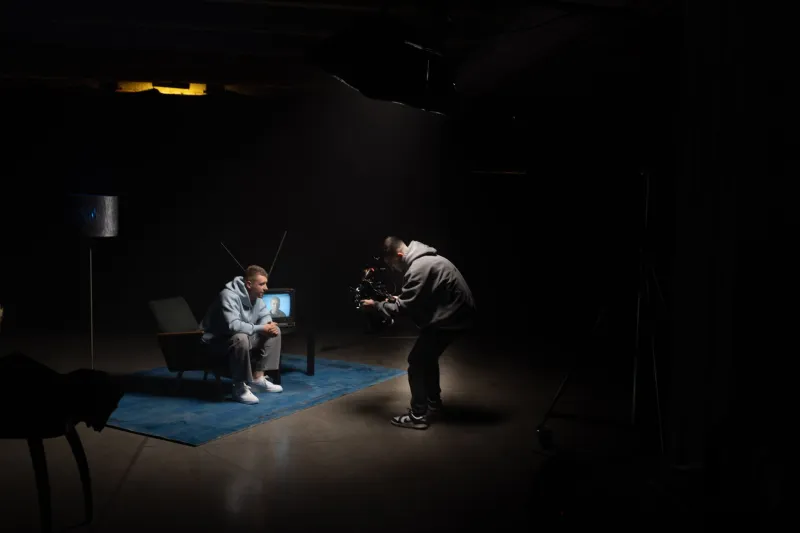
Here's something that'll mess with your head the next time you're deep into a novel: the version of that story living in your imagination right now is already a director's cut. You're placing the camera. You're choosing what gets lit and what stays dark. You're deciding how long the silence lasts before someone speaks.
Professional directors just do it with a crew of three hundred people and a hundred million dollars.
But the really interesting thing — the thing most film school lectures gloss over — is that the best directors in the business aren't rewriting stories when they adapt them. They're interpreting them. And interpretation, done at the highest level, is its own form of authorship. The scene was never written. It was seen.
What the Page Actually Gives You (And What It Doesn't)
A screenplay or a novel hands a director raw material. Dialogue, action lines, emotional beats. What it cannot hand over is the weight of a moment — the specific way a character's silence lands differently depending on whether the camera is six inches from their face or across the room watching them like a stranger.
Take David Fincher's work on Gone Girl. Gillian Flynn's novel is already a masterpiece of unreliable narration — the whole engine of the story runs on what you think you know versus what's actually true. But Fincher made a choice that the book literally could not make: he shot Amy Dunne's sequences with a cold, almost clinical precision. Every frame feels slightly too composed, too controlled. The visual language tells you something is wrong with this woman long before the plot confirms it.
Flynn wrote Amy. Fincher indicted her.
That's not a rewrite. That's a director using the camera as a second narrator.
Kubrick's Geometry of Dread
If you want a masterclass in unwritten storytelling, spend an afternoon studying Stanley Kubrick's adaptation of Stephen King's The Shining. King famously disliked what Kubrick did with his book, and that tension is actually instructive.
King's novel is a story about addiction, about a father's love curdling into violence, about a haunted place feeding on human weakness. It's interior, emotional, almost sympathetic toward Jack Torrance.
Kubrick kept every major plot point. He kept most of the dialogue. What he changed was the geometry.
The Overlook Hotel in Kubrick's version is spatially impossible — hallways that couldn't exist given the building's exterior, rooms that don't match their positions, windows in places windows shouldn't be. Kubrick shot this deliberately. The result is a subliminal unease that you feel before you can name it. Your brain keeps trying to map the space and failing. You are, without realizing it, experiencing the hotel's wrongness in your body.
King's book tells you the hotel is evil. Kubrick's film makes you feel it in your floor plan.
No dialogue was changed. The horror was entirely rewritten.
Spielberg and the Grammar of Withholding
Steven Spielberg is probably the most technically generous director who ever lived — nobody frames a wonder-moment quite like him — but his greatest skill might actually be restraint.
Go back to Jaws. Peter Benchley's novel gives you the shark constantly. It's present, described, almost overexplained. Spielberg, partly out of necessity (the mechanical shark kept breaking), made a decision that transformed the entire film: you wouldn't see the shark until you absolutely had to.
The result is that the first hour of Jaws is a movie about the idea of a shark. About what the water might be hiding. About the gap between safety and catastrophe that exists in every moment you can't see the bottom.
Benchley wrote a monster. Spielberg wrote your imagination.
That's the unwritten scene in its purest form — the director replacing a concrete threat with an abstract one, and trusting the audience's mind to conjure something more terrifying than any prop department could build.
What This Means If You're a Writer
Okay, so why does any of this matter if you're sitting at a desk working on a novel or a screenplay rather than directing a hundred-million-dollar production?
Because the lesson here isn't really about filmmaking. It's about where the story actually lives.
These directors understood something that a lot of writers spend years learning the hard way: the story is not the words. The words are the delivery system. The story lives in the experience — and experience is created through choices that exist completely outside the literal content of your sentences.
Pacing is an unwritten scene. The decision to end a chapter before a revelation rather than after it — that's a camera placement. The choice to describe a room in forensic detail versus letting a single object stand in for everything — that's lighting.
When Fincher shoots Amy Dunne with cold precision, he's doing something every novelist does when they choose sentence length. Short, clipped sentences create the same clinical distance. Long, winding ones pull you inside a character's warm, messy head. Neither choice is written in the dialogue. Both choices are the story.
The Masterclass Nobody Teaches
Most writing advice focuses on what you put in. Character development. Plot structure. Dialogue that crackles. And all of that matters — I'm not dismissing it.
But the unwritten scene is about what you withhold, what you angle, what you let the reader's imagination finish for you. It's the space between the lines where the real emotional weight settles.
Spend some time this week reading a scene from a novel that was later adapted to film. Then watch the same scene. Don't ask whether the film is faithful. Ask what the director added that wasn't on the page — not in terms of content, but in terms of feeling. What did the camera placement tell you? What did the silence communicate? What did the lighting decide?
Then go back to your own work and ask the same questions. Where is your camera? What are you lighting? What are you leaving in the dark on purpose?
The best storytellers — on the page and on the screen — aren't just writing scenes. They're directing them. And the most powerful moments they create are the ones that were never written down at all.